Cartea "The Common European Asylum System"

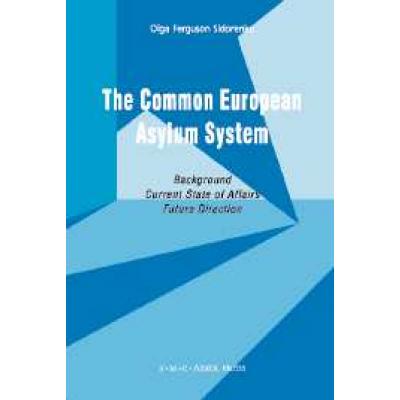
Sidorenko analyses and evaluates the state of affairs of the Common European Asylum System (CEAS). The conclusions of the European Council meeting of Tampere are taken as a 'measuring instrument' to assess the current developments of the CEAS. The implementation in practice of the EU asylum legislation is also evaluated. For this purpose, the implications of the CEAS at a national level in an EU Member State are analysed. Slovakia, a new Member State, was chosen as an example due to its geographical location at the EU external border and the high number of asylum applicants present in this country. By examining EU and national asylum law against the background of international law (the 1951 Geneva Convention Relating to the Status of Refugees), a well-balanced critique of the CEAS is offered which provides views and expectations
The Common European Asylum System
Sidorenko analyses and evaluates the state of affairs of the Common European Asylum System (CEAS). The conclusions of the European Council meeting of Tampere are taken as a 'measuring instrument' to assess the current developments of the CEAS. The implementation in practice of the EU asylum legislation is also evaluated. For this purpose, the implications of the CEAS at a national level in an EU Member State are analysed. Slovakia, a new Member State, was chosen as an example due to its geographical location at the EU external border and the high number of asylum applicants present in this country. By examining EU and national asylum law against the background of international law (the 1951 Geneva Convention Relating to the Status of Refugees), a well-balanced critique of the CEAS is offered which provides views and expectations concerning its future direction.
• Outlines the background of the Common European Asylum System (CEAS) chronologically, giving a better understanding of the reasons for the existence of the CEAS, its obstacles and shortcomings • Offers an in-depth overview and analysis of the current EU legislation and policy instruments on asylum • Contains a case-study from a new EU Member State (Slovakia), illustrating the importance of the effects of European law on the national legal order and practice.
Contents
1. Towards a common European asylum system; 2. EU legislation on asylum; 3. The perspective of a new member state - Slovakia; 4. EU policy on asylum; 5. Concluding remarks.
Nu uitati sa consultati si sectiunea de carti electronice (eBooks - de pe cele mai populare siteuri) de mai jos!

A Brief and Practical Guide to EU Law, 3rd Edition

A Lawyer's Handbook for Enforcing Foreign Judgments in the United States and Abroad

Accountability of Armed Opposition Groups in International Law

Acquisition and Loss of Ownership in Movables
Acting in Concert

After Universalism: Re-engineering Access to Justice

Agenda Juristului 2007

Aid for Trade and Development

Allgemeines Gleichbehandlungsgesetz (AGG)

An International Approach to the Interpretation of the United Nations Convention on Contracts for the International Sale of Goods (1980) as Uniform Sales Law

An Introduction to International Criminal Law and Procedure

An Introduction to International Criminal Law and Procedure
Cu ce ai ramas citind aceasta carte?
 Carti electronice - eBooks

 Cartea pe care o cauti
Partenerul saptamanii
Cartea pe care o cauti
Partenerul saptamanii
 Categorii
- Alimentatie
- Arta
- Agricultura
- Studii
- Manuscrise
- Educatie
- Arta razboiului
- Harti
- Antropologie
- Beletristica si critica
- Atlase
- Carti straine
- Calculatoare
- Astronomie
- Autoevaluare
- Consilier
- Botanica
- Carti pentru copii
- Decoratiuni
- Casa si gradina
- Crestinism
- Cultura
- Toate categoriile
 Edituri
- 100+1 GRAMAR
- ACADEMIA CIVICA
- AD LIBRI
- ADANTIS
- AGAPE
- AGATA
- AION
- ALBASTRA
- ALBATROS
- ALCOR - EDIMPEX
- ALETHEIA
- Toate editurile
TipografiiRecomandari