Cartea "Humanitarian Occupation"

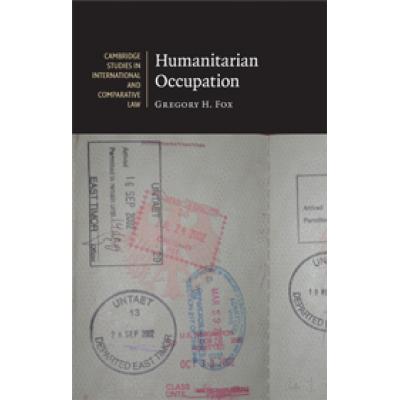
This book analyzes a new phenomenon in international law: international organizations assuming the powers of a national government in order to reform political institutions. After reviewing the history of internationalized territories, this book asks two questions about these ‘humanitarian occupations’. First, why did they occur? The book argues that the missions were part of a larger trend in international law to maintain existing states and their populations. The only way this could occur in these territories, which had all seen violent internal conflict, was for international administrators to take charge. Second, what is the legal justification for the missions? The book examines each of the existing justifications and finds them wanting. A new foundation is needed, one that takes account of the missions’ authorisation
Humanitarian Occupation
This book analyzes a new phenomenon in international law: international organizations assuming the powers of a national government in order to reform political institutions. After reviewing the history of internationalized territories, this book asks two questions about these ‘humanitarian occupations’. First, why did they occur? The book argues that the missions were part of a larger trend in international law to maintain existing states and their populations. The only way this could occur in these territories, which had all seen violent internal conflict, was for international administrators to take charge. Second, what is the legal justification for the missions? The book examines each of the existing justifications and finds them wanting. A new foundation is needed, one that takes account of the missions’ authorisation by the UN Security Council and their pursuit of goals widely supported in the international community.
• Includes the full history of international territorial administration, making this a unique reference source • First complete examination of the legal basis for the UN Security Council assuming the powers of a government, which explores the under-analysed question of the limits of its powers • First explanation of how international administration relates to widely-noted trends in international law.
Contents
Introduction; Part I. Historical Antecedents: 1. The historical origins of humanitarian occupation I - Governance in Service of Outsiders; 2. Historical origins of humanitarian occupation II - internationalised territory in the service of insiders; 3. Full international governance; Part II. Why Humanitarian Occupation?: 4. Rejected models of statehood; 5. Constructing the liberal state; Part III. Legal Justifications: 6. Conventional legal justifications; 7. The international law of occupation; 8. Reforming the law: the security council as legislator; 9. Conclusion.
Nu uitati sa consultati si sectiunea de carti electronice (eBooks - de pe cele mai populare siteuri) de mai jos!

10 Years Southeast European Cooperative Initiative
2001 - 2005
A Book of Legal Lists The Best and Worst in American Law with 150 Court and Judge Trivia Questions (Hardback)
A Book of Legal Lists The Best and Worst in American Law with 150 Court and Judge Trivia Questions (Paperback)
A Brief and Practical Guide to EU Law, 3rd Edition
A Casebook of Medical Ethics (Paperback)
A Common Consolidated Corporate Tax Base for Europe – Eine einheitliche Körperschaftsteuerbemessungsgrundlage für Europa
A Common Law of International Adjudication (Hardback)
A Continental Distinction in the Common Law A Historical and Comparative Perspective on English Public Law (Hardback)
A Continental Distinction in the Common Law A Historical and Comparative Perspective on English Public Law (Revised Edition with a New Afterword - Paperback)
A Dictionary of Legal Theory (Hardback)
A Europe of Rights The Impact of the ECHR on National Legal Systems (Hardback)
Cu ce ai ramas citind aceasta carte?
 Carti electronice - eBooks

 Cartea pe care o cauti
Partenerul saptamanii
Cartea pe care o cauti
Partenerul saptamanii
 Categorii
- Educatie
- Arta razboiului
- Harti
- Alimentatie
- Arta
- Agricultura
- Studii
- Manuscrise
- Atlase
- Antropologie
- Beletristica si critica
- Autoevaluare
- Consilier
- Botanica
- Carti straine
- Calculatoare
- Astronomie
- Carti pentru copii
- Crestinism
- Decoratiuni
- Casa si gradina
- Civilizatii
- Toate categoriile
 Edituri
- 100+1 GRAMAR
- ACADEMIA CIVICA
- AD LIBRI
- ADANTIS
- AGAPE
- AGATA
- AION
- ALBASTRA
- ALBATROS
- ALCOR - EDIMPEX
- ALETHEIA
- Toate editurile
TipografiiRecomandari