Cartea "The Making of Modern Intellectual Property Law"

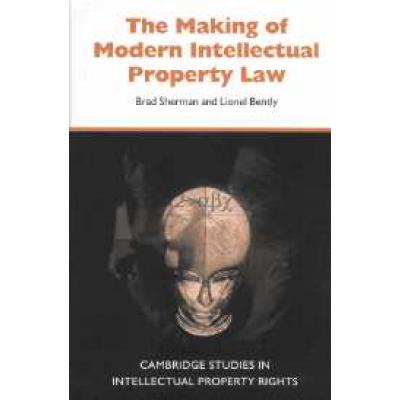
One of the common themes in recent public debate has been the law’s inability to accommodate the new ways of creating, distributing and replicating intellectual products. In this book the authors argue that in order to understand many of the problems currently confronting the law, it is necessary to understand its past. This is its first detailed historical account. In this book the authors explore two related themes. First, they explain why intellectual property law came to take its now familiar shape with sub-categories of patents, copyright, designs and trade marks. Secondly, the authors set out to explain how it is that the law grants property status to intangibles. In doing so they explore the rise and fall of creativity as an organising concept in intellectual property law, the mimetic nature of intellectual property law
The Making of Modern Intellectual Property Law
One of the common themes in recent public debate has been the law’s inability to accommodate the new ways of creating, distributing and replicating intellectual products. In this book the authors argue that in order to understand many of the problems currently confronting the law, it is necessary to understand its past. This is its first detailed historical account. In this book the authors explore two related themes. First, they explain why intellectual property law came to take its now familiar shape with sub-categories of patents, copyright, designs and trade marks. Secondly, the authors set out to explain how it is that the law grants property status to intangibles. In doing so they explore the rise and fall of creativity as an organising concept in intellectual property law, the mimetic nature of intellectual property law and the important role that the registration process plays in shaping intangible property.
• First detailed historical account of ‘IP’ (the post-1911 book should be written in time) • Two young scholars’ widely respected in their joint presentation of these ideas /now written up • Offers a number of important lessons for current debates in the area.
Contents
Part I. Towards a Property in Intangibles: 1. Property in mental labour; 2. The mentality of intangible property; Part II. The Emergence of a Modern Intellectual Property Law: 3. Designing the law; 4. Managing the legal boundaries; Part III. Towards an Intellectual Property Law: 5. Crystallization of the categories; 6. Completing the framework; 7. Explanations for the shape of intellectual property law; Part IV. Transformations in the Intellectual Property Law: 8. Changes in the framework; 9. From creation to object; 10. Closure and its consequences; 11. Remembering and forgetting; Bibliography.
Nu uitati sa consultati si sectiunea de carti electronice (eBooks - de pe cele mai populare siteuri) de mai jos!

Australian Intellectual Property Law
Copyright and Multimedia Products

DREPTUL DE PROPRIETATE INTELECTUALĂ

DREPTUL PROPRIETATII INTELECTUALE/Dreptul de autor/de proprietate industriala.Spete/Contracte

Driving Innovation

Driving Innovation

Intellectual Property Law and Innovation

Revista Romana de Arbitraj

Software and Patents in Europe

Teaching of Intellectual Property
The Commercial Appropriation of Personality

The Interface Between Intellectual Property Rights and Competition Policy
Cu ce ai ramas citind aceasta carte?
 Carti electronice - eBooks

 Cartea pe care o cauti
Partenerul saptamanii
Cartea pe care o cauti
Partenerul saptamanii
 Categorii
- Arta
- Agricultura
- Studii
- Manuscrise
- Educatie
- Arta razboiului
- Harti
- Alimentatie
- Antropologie
- Beletristica si critica
- Atlase
- Calculatoare
- Astronomie
- Autoevaluare
- Consilier
- Botanica
- Carti straine
- Carti pentru copii
- Casa si gradina
- Crestinism
- Decoratiuni
- Cultura generala
- Toate categoriile
 Edituri
- 100+1 GRAMAR
- ACADEMIA CIVICA
- AD LIBRI
- ADANTIS
- AGAPE
- AGATA
- AION
- ALBASTRA
- ALBATROS
- ALCOR - EDIMPEX
- ALETHEIA
- Toate editurile
TipografiiRecomandari