Cartea "Self-Regulation in Cyberspace"

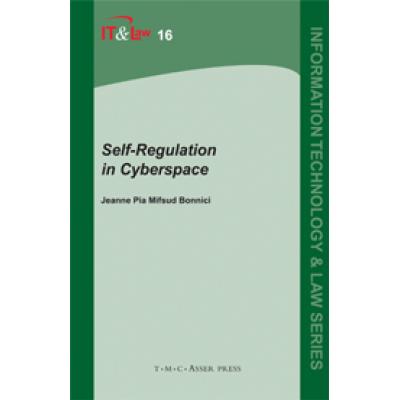
Is private regulation of the Internet over? Have states taken over? This book examines the function of self-regulation in cyberspace. It argues that, contrary to what is often supposed in the literature, self-regulation is still an indispensable part of regulation of the Internet and will arguably remain so. It is intricately woven in the mesh of rules that governs the Internet today. Private regulation fills substantive or procedural gapsno state regulation exists orit is incomplete or ineffective, thus complementing the reach of state regulation. Simultaneously, states supply legal (and financial) frameworks that enable or complement self-regulation. In practice, often unknown to users, their behaviour is regulated by intertwined rules coming from both states and private groups. While each source of rules retains its identity
Self-Regulation in Cyberspace
Is private regulation of the Internet over? Have states taken over? This book examines the function of self-regulation in cyberspace. It argues that, contrary to what is often supposed in the literature, self-regulation is still an indispensable part of regulation of the Internet and will arguably remain so. It is intricately woven in the mesh of rules that governs the Internet today. Private regulation fills substantive or procedural gapsno state regulation exists orit is incomplete or ineffective, thus complementing the reach of state regulation. Simultaneously, states supply legal (and financial) frameworks that enable or complement self-regulation. In practice, often unknown to users, their behaviour is regulated by intertwined rules coming from both states and private groups. While each source of rules retains its identity and regulatory strengths, it is dependent on and complementary to the rules and processes of the other to effectively regulate Internet activities.
• Clear and transparent structure helps in the understanding of the material presented • The text is very accessible to all audiences – no technical background is required • The text brings into discussion a wide variety of legal notions, making it relevant not only to a technical IT and law audience but to any lawyer or general reader who would like to know about the regulation of the Internet.
Contents
1. Introduction; 2. Theoretical Approaches to Self-Regulation on the Internet; 3. Identifying Self-Regulation; 4. Self-Regulation of Internet Content; 5. Self-Regulation of the Domain Name System; 6. Self-Regulation by Technical Standards; 7. Self-Regulation in the Resolution of Online Disputes; 8. Conclusion: Self-Regulation in Cyberspace.
Nu uitati sa consultati si sectiunea de carti electronice (eBooks - de pe cele mai populare siteuri) de mai jos!

Logică computatională
Cu ce ai ramas citind aceasta carte?
 Carti electronice - eBooks

 Cartea pe care o cauti
Partenerul saptamanii
Cartea pe care o cauti
Partenerul saptamanii
 Categorii
- Educatie
- Arta razboiului
- Harti
- Alimentatie
- Arta
- Agricultura
- Studii
- Manuscrise
- Atlase
- Antropologie
- Beletristica si critica
- Autoevaluare
- Consilier
- Botanica
- Carti straine
- Calculatoare
- Astronomie
- Carti pentru copii
- Crestinism
- Decoratiuni
- Casa si gradina
- Civilizatii
- Toate categoriile
 Edituri
- 100+1 GRAMAR
- ACADEMIA CIVICA
- AD LIBRI
- ADANTIS
- AGAPE
- AGATA
- AION
- ALBASTRA
- ALBATROS
- ALCOR - EDIMPEX
- ALETHEIA
- Toate editurile
TipografiiRecomandari